Top 10 Best Closures for Liquor Bottles

Time:2026-09-25 Author:Aria
0%

A liquor bottle’s closure does more than keep the contents inside. It affects pouring, resealing, shelf appearance, and the customer’s first impression. Some choices feel reassuring in the hand; others can be awkward to open or difficult to reseal. Small detail. Real consequences.

The IWSR’s 2024 global beverage alcohol analysis reported a 1% decline in volume in 2023, alongside growth in value. That uneven picture makes packaging decisions worth careful attention, especially for brands competing on quality and presentation. The report does not rank bottle closures, so it should not be treated as evidence that one design sells better. It does show why practical packaging choices matter in a changing market.

So, what is the best closure for liquor bottles? There is no single answer for every spirit, bottle, or customer. Cork, screw caps, bar-top stoppers, and other options differ in opening feel, resealing, compatibility, cost, and visual character. A closure that suits a premium gift bottle may be inconvenient for a bottle used often at home. Fit matters. This guide compares ten common closure types using those practical considerations, rather than assuming appearance alone tells the whole story. It also notes trade-offs, because even a well-made closure can have limitations. Check the bottle finish and supplier specifications before choosing; small compatibility details are easy to overlook.
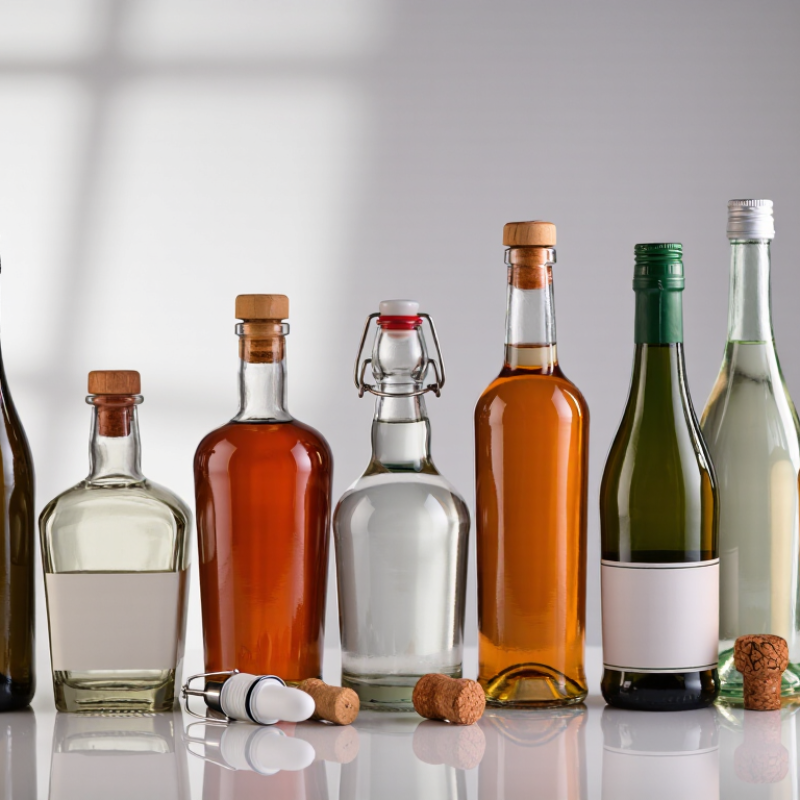
Top 10 Best Closures for Liquor Bottles

Understanding the Role of Closures in Liquor Bottles

A liquor bottle closure is a working part of the package, not just a finishing touch. It helps reduce leakage and limits contact with air after opening. The fit between the closure and bottle neck matters: a loose liner or uneven rim can weaken the seal. Small details count. A screw cap is often practical for repeated opening, while cork and synthetic stoppers can offer a different feel and pouring experience. Glass stoppers may suit some designs, but they still need a precise fit. No closure is perfect for every bottle.

Closures also affect handling, storage, and how easily a bottle can be opened. A textured cap may be easier to grip with damp hands; a tight stopper can be difficult for some people to remove. That is easy to overlook. Materials should be selected for compatibility with the liquid and expected storage conditions, and the finished package should be checked for fit and leakage. A closure that looks refined can still disappoint if it drips onto a shelf. Even so, appearance matters to buyers, and balancing seal performance, usability, and visual style takes care. The best choice depends on the bottle, the product, and how people will use it.

Key Factors for Evaluating Liquor Bottle Closures

Choosing a liquor-bottle closure means balancing seal integrity, opening effort, resealing, line speed, and cost. Test the actual bottle-and-closure combination, not a cap in isolation. Measure application and removal torque across production runs; wide variations may reveal poor fit or inconsistent application. For spirits, check liner compatibility with the intended alcohol strength, storage temperature, and contact time. A good seal limits leakage and unwanted air exchange while remaining practical after opening. No closure wins every test.

Material choice affects handling and end-of-life options. The U.S. EPA’s 2018 Advancing Sustainable Materials Management report estimated that 25% of glass containers and packaging were recycled in the United States. That figure concerns glass packaging, not closure recycling, so assess the cap, liner, and bottle separately. Consider whether the closure can withstand shipping vibration and repeated use. I would not treat a successful bench test as proof of reliable performance in every filling line.

Tips: Test filled bottles upright and on their sides, then inspect for seepage. Record opening torque after storage. Keep the test realistic.

Top 10 Liquor Bottle Closures: Key Evaluation Factors

Scores are indicative qualitative ratings (1 = lower, 5 = higher), based on typical closure design characteristics—not laboratory test results. Actual performance depends on the closure specification, bottle finish, and application.

Ten Common Closure Types and How They Work

Natural cork seals by compressing into the bottle neck, then expanding against the glass. Technical cork uses cork particles bound together, while synthetic corks rely on flexible polymers. All three are removed by pulling, but fit and storage conditions affect how reliably they seal. Screw caps tighten onto neck threads, with a liner forming the seal. Check that liner. A loose or damaged one can undermine an otherwise sound cap.

Bar-top stoppers use a head and a tapered plug, often secured by friction rather than threads. Glass stoppers fit closely against a shaped neck and can be reused, though small chips may spoil the seal. Crown caps crimp around the bottle lip, using an internal liner to close the opening. They need a compatible neck finish and a suitable opener. Roll-on pilfer-proof caps are formed around the neck; their skirt helps show whether the cap has been opened.

Snap-fit caps press over a matching rim and lock in place with molded features. Pourer closures combine a stopper or cap with an insert that directs liquid into a narrow stream. Useful, but they can be harder to clean. In practice, closure choice depends on the bottle finish, desired pouring control, and storage needs. No type is perfect; testing samples with the actual bottle is wiser than relying on appearance alone.

Comparing Closure Performance, Cost, and Sustainability

For liquor bottles, closure choice is a three-way trade-off: seal reliability, total line cost, and end-of-life handling. A screw cap offers repeatable opening torque and convenient resealing, but liner choice and application settings matter; a poor fit can leak or feel inconsistent. Natural cork brings a tactile, traditional opening, yet its variability may increase inspection and rejection costs. Synthetic cork and bar-top closures suit distinctive bottle formats, though their added material and assembly steps can raise unit cost. Small details matter: a cap that scuffs against the neck during capping can turn a premium-looking bottle into a reject.

Public recycling figures offer useful context, not a closure-by-closure verdict. Eurostat reported that 74.9% of glass packaging waste was recycled in the EU in 2022. That supports glass bottle recovery, but does not prove that every attached stopper or liner is recovered with it. European Aluminium’s 2023 industry report put Europe’s beverage-can recycling rate at 76%; this is a material-system benchmark, not a liquor-cap rate. Keep that distinction clear.

For purchasing teams, compare landed closure cost with line speed, leakage checks, tamper-evident features, and local sorting guidance. Metal caps may be recyclable where collection systems accept them; composite closures can be harder to separate. Simple is not always greener. I would avoid choosing on material weight alone: lightweight parts still need dependable sealing, and sustainability data for individual closures remains patchy.

Choosing a Closure for Different Liquor Products

Top 10 Best Closures for Liquor Bottles

Choosing a closure starts with the liquid, not the bottle’s silhouette. High-alcohol spirits need a tight, compatible seal that resists leakage and unwanted aroma loss. Screw caps can suit frequent opening and reliable resealing; bar-top stoppers offer easy handling for bottles served at home or behind a bar. For cream liqueurs, check that the liner and closure materials are suitable for the formulation. Always confirm fit with filled-bottle storage tests. A closure that seals well on day one may behave differently after repeated use.

Fit matters. Match the closure to how the product will be poured, stored, and displayed. A cork-style stopper may feel appropriate for a premium spirit, but it can be awkward if consumers need a precise pour. Tamper-evident features can provide visible evidence of opening, while a well-fitted screw cap may be more practical for everyday use. FEVE’s 2022 European glass-packaging data reported a collection-for-recycling rate of roughly 80%. That makes closure separation worth considering when selecting materials, though local recycling systems vary. Not just looks. Test the full package for leakage, opening effort, resealing, and material compatibility before committing to production. I would not choose by appearance alone; real handling feedback can reveal problems a bench test misses.

Top 10 Best Closures for Liquor Bottles - Choosing a Closure for Different Liquor Products

No. Closure Type Typical Construction Best-Suited Liquor Products Key Advantages Selection Considerations
1 Natural cork stopper Single-piece cork compressed into the bottle neck; commonly secured with a capsule. Premium spirits, aged spirits, and bottles intended for a traditional presentation. Distinctive appearance and a satisfying opening experience; can be removed and reinserted. Requires suitable neck dimensions and consistent cork quality. Store bottles upright to limit prolonged contact between high-strength spirits and the cork.
2 Technical or agglomerated cork Reconstituted cork granules, sometimes combined with cork discs, formed into a stopper. Spirits seeking a cork appearance with more standardized stopper dimensions. Can offer consistent sizing and an attractive cork-style finish; available in different grades and constructions. Confirm compatibility with the bottle finish and spirit strength. Performance depends on the stopper’s composition and manufacturing quality.
3 Synthetic cork stopper Molded polymer stopper shaped to fit a cork-finish bottle neck. Regular-release spirits and products where resealing and consistent dimensions are priorities. Uniform appearance and dimensions; avoids natural cork variability. Check material compatibility, insertion and removal force, and sealing performance with the specific spirit and bottle.
4 T-top or bar-top stopper A stopper, often cork or polymer, attached to a larger wood, plastic, or metal grip. Premium or gift-oriented spirits, especially products intended to be opened and resealed repeatedly. Easy to grip and remove; provides room for a decorative top and works well with a suitable bottle finish. Requires a compatible neck bore and a reliable stopper fit. Not every design provides tamper evidence or a child-resistant feature.
5 Aluminum screw cap Metal threaded cap with an internal liner, typically applied to a matching threaded bottle finish. Vodka, gin, rum, whisky, and other spirits packaged for convenient opening and resealing. Convenient to use, compact, and suitable for automated application; the liner supports the seal. Match the cap thread and liner to the bottle finish and product. Tamper-evident performance depends on the cap design and application.
6 ROPP aluminum closure Roll-on pilfer-proof aluminum cap formed around a compatible glass bottle finish, usually with a tamper-evident band. Spirits requiring a screw-style opening with visible evidence of first opening. Provides a familiar resealable format and a tamper-evident band when correctly specified and applied. Requires compatible bottle-finish dimensions and suitable capping equipment. The band must separate as intended when first opened.
7 Plastic screw cap Threaded polymer cap with a sealing liner or integrated sealing feature; may include a tamper-evident band. Everyday spirits, value-oriented products, and lightweight packaging formats. Lightweight, easy to open, and available in a broad range of functional designs. Verify material and liner compatibility with the spirit, along with thread fit, seal integrity, and tamper-evident requirements.
8 Crown cap Crimped metal cap with a liner, applied over a compatible crown-finish bottle neck. Some ready-to-drink alcoholic beverages and smaller-format products, including carbonated offerings. Compact and well suited to compatible bottles; can provide a secure seal for products requiring pressure retention when properly specified. Use only with a matching bottle finish and a closure system designed for the product’s pressure and storage conditions.
9 Swing-top closure Reusable stopper held in place by a wire bail, commonly with a gasket. Small-batch presentations, refillable formats, or products designed for repeated opening and closing. Reusable and distinctive; does not require a separate screw cap for resealing. Needs a compatible bottle lip and a sound gasket. Inspect the wire, hinge, and gasket for wear and verify the seal for the intended product.
10 Child-resistant closure Typically a push-and-turn or squeeze-and-turn cap, often paired with a compatible threaded bottle finish. Products or markets where child-resistant packaging is required or selected as an added safety measure. Can provide an additional access barrier when the complete package passes the applicable testing requirements. Requirements vary by market and product. Confirm regulatory applicability, package testing, user accessibility, and compatibility with the bottle and liner.

FAQS

How does a natural cork closure seal a bottle?

The cork compresses inside the neck, then expands against the glass. Storage conditions still matter.

Are synthetic and technical corks used in the same way?

Both are removed by pulling. Technical cork uses bound cork particles, while synthetic cork uses flexible polymers. Their sealing performance can differ.

What should I check on a screw cap?

Inspect the inner liner. A loose or damaged liner may cause leakage or aroma loss, even when the cap looks tight.

When is a bar-top stopper useful?

It suits bottles opened often at home or behind a bar. Its tapered plug relies mainly on friction. Easy handling.

What problems can glass stoppers have?

They fit closely against a shaped neck and can be reused. Small chips may weaken the seal, so inspect the edges carefully.

How do crown caps and roll-on caps show different features?

Crown caps crimp around the bottle lip and need a suitable opener. Roll-on caps form around the neck, with the skirt showing possible opening.

Are pourer closures easy to maintain?

They guide liquid into a narrow stream, which improves pouring control. Cleaning can be harder, especially around the insert.

How should a closure be chosen for a high-alcohol spirit?

Choose a compatible, tight seal that resists leakage and unwanted aroma loss. Test the filled bottle during storage.

Is appearance a reliable way to select a closure?

Not really. A cork-style stopper may look premium but pour poorly. Real handling tests reveal awkward problems.

What should be tested before production?

Test leakage, opening effort, resealing, material compatibility, and repeated use. One test is not enough. Packaging can behave differently later.

Conclusion

This article explains how closures protect the flavor, freshness, and quality of liquor while influencing ease of use, presentation, and storage. It outlines key factors for evaluating a closure, including sealing performance, compatibility with the bottle, opening and resealing convenience, cost, and environmental impact. Readers will also find an overview of ten common closure types, such as screw caps, corks, synthetic stoppers, and dispensing closures, along with how their designs work.

Rather than naming one option as universally superior, the article compares closure performance, price, and sustainability to help answer the question, “what is the best closure for liquor bottles.” The right choice depends on the product’s properties, intended use, packaging goals, and production needs. By weighing these considerations together, producers can select a closure that offers dependable protection, suits the bottle and its contents, and provides a practical experience for consumers.

Aria

Aria

Aria is a dedicated marketing professional with a deep passion for innovative strategies and a keen understanding of our company's product offerings. With a wealth of experience in the industry, Aria excels at crafting engaging content that highlights the unique features and benefits of our......