China’s glass packaging market is expanding across food, beverages, cosmetics, and pharmaceuticals. Compliance, however, is not a single certificate placed on a factory wall. Buyers must connect product use, material composition, manufacturing controls, and destination-market rules.
So, what certifications are needed for glass packaging? The answer depends on whether the container touches food, medicine, cosmetics, or general products. For food and beverage bottles sold in China, suppliers commonly prepare compliance evidence under GB 4806.5 for glass products intended for food contact. They may also provide migration testing, material declarations, batch traceability, and factory quality records. ISO 9001 supports consistent production. HACCP or FSSC 22000 can strengthen food-safety control. ISO 14001 may support environmental purchasing requirements.
The details matter. A clear bottle, a colored bottle, and a glass jar may require different testing attention. Caps, coatings, inks, and seals must also be reviewed. The bottle alone is not always the complete contact system.
Packaging expert Walter Soroka described packaging as “the science, art, and technology of enclosing and protecting products.” That statement remains practical today. Protection must include chemical safety, physical performance, and reliable documentation. Exporters may additionally need FDA or EU food-contact evidence, depending on the destination.
There is no universal certificate.
Some suppliers present ISO certificates but lack product-specific test reports. That gap deserves careful questioning. A dependable sourcing process checks the certificate scope, testing laboratory, production site, and latest regulation version. Requirements can change, and old documents may quietly become weak evidence.
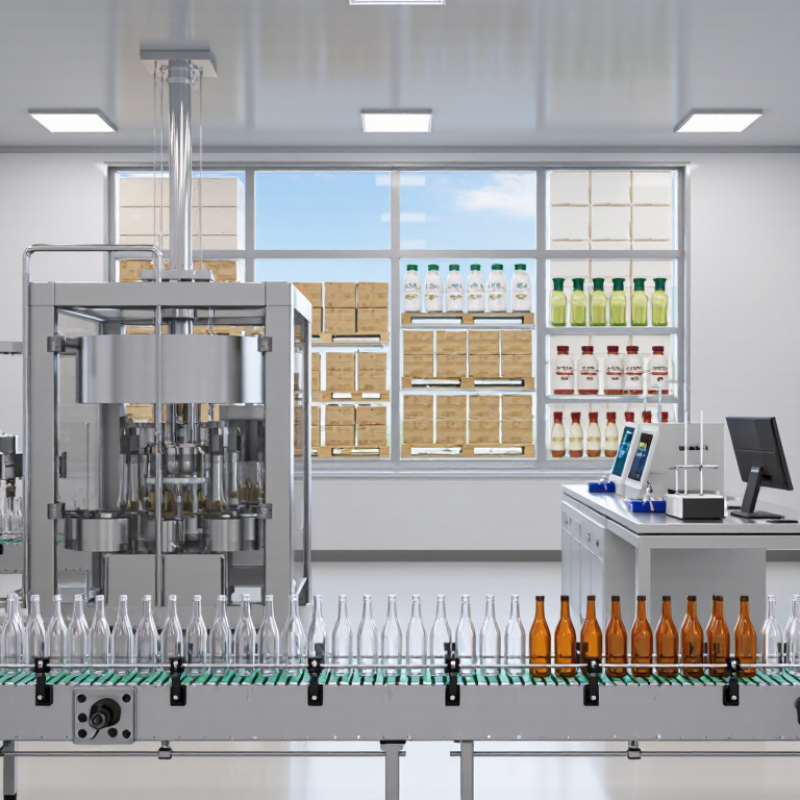
For buyers sourcing glass packaging in China, required certifications depend on the contents and sales market. Food and beverage containers generally need to comply with China’s GB 4806 series. GB 4806.5 covers glass products that contact food, while GB 4806.1 sets general safety requirements.
Suppliers should provide recent test reports from qualified laboratories, migration results, material details, and traceable batch records.
Ask whether the report covers the exact bottle, coating, closure, and decoration.
A beautiful bottle is not automatically compliant.
Pharmaceutical packaging follows stricter, product-specific controls. Glass containers may need to meet applicable Chinese Pharmacopoeia standards and registration or filing requirements linked to the medicine. The drug manufacturer remains responsible for suitability, including extractables, leachables, compatibility, and sterilization performance.
Cosmetic packaging usually requires evidence supporting product safety and material compliance. However, there is no universal “cosmetic glass certificate” for every situation. Confirm the intended use with a qualified regulatory professional.
China Compulsory Certification, or CCC, is not normally a blanket requirement for ordinary glass bottles and jars. ISO 9001 and ISO 14001 can support supplier evaluation, but they do not replace legal testing. Check CMA or CNAS laboratory credentials, report validity, Chinese labeling requirements, and destination-country rules before shipment.
Requirements may change with coatings, recycled content, and closure materials. Some teams overlook the cap. That is a costly gap.
Retaining samples from each production lot is wiser than relying on one old report, although even this process needs regular review.
Chinese glass packaging certifications are best classified by end use, market, and production control. This avoids a common mistake: treating every document as a product certificate. For food jars and beverage bottles, suppliers usually need compliance evidence against applicable Chinese food-contact standards. Testing may cover lead, cadmium, migration, heat resistance, and composition. Cosmetic containers follow a different risk profile. Their focus includes material safety, cleanliness, and compatibility with creams or liquids. Pharmaceutical packaging demands tighter control. Glass type, hydrolytic resistance, dimensional accuracy, and sterilization performance may become critical.
For domestic sales, Chinese GB standards and factory quality records are central. For export orders, the classification expands. Importing countries may request food-contact, cosmetic, or pharmaceutical test reports. They may also require declarations, batch traceability, and audits. An ISO management certificate can support supplier evaluation, but it does not automatically prove product safety.
Environmental credentials, such as energy or recycling evidence, address a separate category. Do not place them beside safety approvals without explanation.
In practice, I would ask for a document matrix before approving samples. It should list the product, glass composition, intended contents, temperature range, test method, issuing laboratory, and validity date.
Short documents can hide long risks. One weak point is that a report may cover only a sample, not every future batch. Another is translation quality; a vague English version can change technical meaning.
Factories should connect certificates with incoming-material checks, furnace records, inspection data, and complaint handling. That link is often missing. Certification is not a single badge. It is a traceable evidence chain, reviewed when the formula, closure, or production line changes.
China Top Glass Packaging: What Certifications Are Needed?
For glass containers, food-contact compliance depends on the destination market and product use. China commonly applies GB 4806.5-2016 to food-contact glass products. General requirements may also come from GB 4806.1. Exporters should prepare migration test reports, material specifications, and batch traceability records. Tests often examine lead, cadmium, and other substances that could transfer into food. Clear glass is not automatically compliant.
For the European Union, Regulation (EC) No 1935/2004 and good manufacturing practice rules are key references. The United States commonly evaluates glass under FDA food-contact requirements, including relevant sections of 21 CFR. A declaration of compliance may be requested, although the exact document depends on the importer and market. Closures, coatings, inks, and seals need separate review. They may create risks that the glass itself does not.
Tips: Ask the supplier for recent, product-specific reports. Check whether testing used the actual shape, coating, and intended food type. Acidic drinks and hot filling can require different conditions. Keep factory audits and production records available. ISO 9001 supports quality management, but it is not a food-contact approval. Some paperwork may look impressive yet prove little. Recheck requirements when the formula, decoration, or export country changes.
| Market / Region | Primary Food-Contact Framework | Relevance to Glass Containers | Typical Compliance Evidence | Certification or Document Status |
|---|---|---|---|---|
| China | GB 4806.1-2016; GB 4806.5-2016; applicable GB 31604 testing methods | GB 4806.5-2016 specifically covers glass products that come into contact with food. Requirements include sensory properties, chemical safety, and migration-related controls. | Material and formulation records, supplier declarations, batch traceability, and test reports from a competent laboratory using applicable Chinese methods. | A general “glass certification” is not automatically required for every product. Compliance documentation and test evidence are normally expected. |
| European Union | Regulation (EC) No 1935/2004; Regulation (EC) No 2023/2006 on Good Manufacturing Practice | Glass must not transfer substances to food in quantities that endanger health, cause unacceptable changes, or deteriorate taste or odor. Glass does not have one fully harmonized EU-specific measure equivalent to the plastics regulation. | Risk assessment, composition information, migration or extractables testing where justified, GMP records, traceability, and a written compliance statement. | A Declaration of Compliance is commonly used in the supply chain, although the exact document format depends on the material, coating, closure, and national requirements. |
| United States | Federal Food, Drug, and Cosmetic Act; FDA food-contact substance requirements in Title 21 CFR | The glass body, pigments, coatings, labels, adhesives, inks, and closures must each be suitable for their intended food-contact use. The final compliance route depends on the composition and conditions of use. | Supplier composition statements, applicable FDA regulatory references, Food Contact Notifications where applicable, extraction or migration data, and intended-use assessment. | FDA does not generally issue a universal certificate for ordinary glass containers. Compliance is established through the applicable regulatory authorization and supporting records. |
| United Kingdom | UK food-contact materials legislation retained or implemented after EU exit, including general safety and GMP requirements | Glass packaging must be suitable for the intended food, temperature, contact time, and use conditions. Additional controls apply to coatings, decorations, and components that may contact food. | Risk assessment, traceability, GMP documentation, supplier declarations, and relevant analytical test results. | No universal government-issued glass certificate is normally required; documented regulatory compliance is the key requirement. |
| Japan | Food Sanitation Act and applicable specifications issued by the Japanese authorities | Glass containers must meet applicable material and safety specifications. Particular attention is required for colorants, coatings, closures, and other food-contact components. | Material declarations, specification checks, testing where required, and supply-chain documentation confirming intended use. | The requirement is generally regulatory compliance rather than a standalone glass-container certificate. |
| Canada | Food and Drugs Act and applicable Canadian food-packaging safety requirements | The packaging must not impart harmful substances or adversely affect the food. The complete packaging system should be assessed, including coatings and closures. | Composition information, supplier assurance, intended-use assessment, and supporting migration or extraction data when appropriate. | A general mandatory certificate for standard glass containers is not normally the primary compliance route. |
| Australia and New Zealand | Food Standards Code, including food-packaging and food-contact safety provisions | Glass packaging should be fit for purpose and should not contaminate food under the intended conditions of storage, filling, processing, or use. | Supplier declarations, composition information, safety assessment, and testing for coatings, decorations, or other non-glass components. | Usually demonstrated through technical documentation rather than a universal government-issued glass certificate. |
| All Export Markets | Customer specification, destination-country law, and recognized management-system standards | The entire packaging system should be reviewed: glass composition, internal coating, external coating, printing ink, adhesive, liner, cap, gasket, and sealing compound. | Product specification, technical data sheet, food-contact declaration, test report, change-control procedure, traceability records, and certificate of analysis when requested. | ISO 9001, ISO 22000, FSSC 22000, BRCGS Packaging Materials, and similar standards may support supplier approval, but they do not replace destination-country food-contact compliance. |
Chinese glass packaging suppliers need more than one certificate to export smoothly. The exact requirements depend on the product, destination, and intended use. Food, beverage, cosmetic, and pharmaceutical containers may follow different compliance routes.
ISO 9001 supports quality management, but it does not prove food-contact safety. ISO 14001 and ISO 45001 can strengthen environmental and workplace credibility. For food packaging, suppliers often prepare compliance documents for EU Regulation 1935/2004, related GMP rules, or applicable FDA requirements. Some buyers may also request LFGB testing for the German market. Independent laboratories can test migration, heavy metals, thermal shock, and chemical durability. Test reports should identify the glass type, production batch, and testing method.
Export paperwork matters too. A supplier normally prepares a commercial invoice, packing list, customs declaration, and transport documents. A certificate of origin may be required by the importing country. Packaging specifications should state capacity, neck size, tolerance, closure compatibility, and inspection standards. In practice, paperwork is often the weak point. A valid certificate can still be outdated or unrelated to the exact bottle. Buyers should verify the issuing body, certificate scope, expiry date, and factory address. This step takes time. It also prevents expensive misunderstandings. Certification alone cannot replace sample approval, factory audits, and batch-level quality checks.
When sourcing glass packaging from China, do not trust a certificate because its logo looks familiar. In supplier audits, I check the certificate number, legal entity, factory address, certification scope, and expiry date. The scope must cover glass packaging production, not only trading or office management. ISO’s 2023 Survey recorded 1,265,216 ISO 9001 certificates worldwide, yet a certificate alone does not prove every factory location is covered.
Ask for the complete certificate, not a cropped image. Verify it through the issuing body’s public database or by contacting its official office independently. Check the accreditation mark and confirm whether the certification body is accredited for that standard. The certificate should match the supplier’s business license and the manufacturing address printed on purchase documents. Small differences matter. A missing branch address can create an expensive gap.
For food-contact glass, request the applicable declaration of compliance and supporting migration or composition tests. The report should identify the exact glass type, closure, coating, test method, laboratory, sample date, and batch information. ISO’s 2022 CASCO report emphasizes impartial conformity assessment and competent testing, which makes laboratory accreditation important. Test reports from an ISO/IEC 17025-accredited laboratory are stronger evidence than an unsigned supplier statement. Still, paperwork can be outdated. Ask for a recent production sample and compare its markings with the tested material. A perfect document may describe the wrong bottle. That mistake is easy to miss.
Typical relevance of key certifications and compliance documents for glass packaging suppliers
ISO 9001 is commonly requested for quality management, while ISO 14001 and food-packaging safety schemes are usually customer or sustainability requirements rather than universal legal obligations. For the United States, request a food-contact compliance statement supporting applicable FDA requirements. For the European market, request an EU Declaration of Compliance and supporting migration or test reports when applicable. Always verify the certificate number, issuing or certification body, accreditation status, covered site, scope, standard version, issue date, and expiry date. The chart shows general buyer relevance, not a universal legal requirement.
Food-contact glass generally follows China’s GB 4806 safety requirements. Suppliers should provide recent migration test reports. The reports should match the exact bottle, coating, closure, and decoration. A clear glass surface proves very little. Details matter.
No, ordinary glass bottles and jars do not normally require blanket compulsory certification. Requirements depend on the product and intended use. Do not assume an exemption without checking the current rules. That assumption can age badly.
Request test reports, material details, batch records, and product specifications. Check the laboratory credentials and report validity. Specifications should include capacity, neck size, tolerances, and closure compatibility. Keep samples from each production lot when possible.
No. ISO 9001 supports quality management systems. It does not prove food-contact safety. Separate migration and material testing remains necessary. One certificate cannot answer every safety question.
Confirm the exact bottle and production batch listed in the report. Review the testing method, laboratory credentials, issue date, and certificate scope. Check whether coatings, decorations, caps, and seals were included. The cap is easy to overlook. It can create a costly gap.
Usually, yes. Pharmaceutical containers may need applicable pharmacopoeia standards and product-related registration or filing. Suitability includes compatibility, extractables, leachables, and sterilization performance. The medicine manufacturer remains responsible for final suitability. Glass alone is not enough.
No universal cosmetic glass certificate covers every situation. Requirements depend on the cosmetic product, market, and packaging materials. Buyers should confirm the intended use with a qualified regulatory professional. The answer may change after adding coatings or recycled content.
Export shipments commonly need a commercial invoice, packing list, customs declaration, and transport documents. Some destinations also require a certificate of origin. Packaging specifications should match the shipped goods. Paperwork is often the weak point. A valid report may still describe another bottle.
No. Certification supports compliance, but it cannot replace practical verification. Approve physical samples before mass production. Audit the factory when the risk justifies it. Inspect production batches and retain reference samples. Even a careful process needs regular review.
When asking what certifications are needed for glass packaging in China, buyers should first identify the product’s intended use, materials, manufacturing process, and destination market. Common requirements may include domestic product-quality documentation, food-contact compliance for containers used with beverages or food, and management-system certificates that demonstrate controlled production. Food-contact glass packaging should be supported by relevant Chinese testing and safety standards, including evidence that the glass, coatings, inks, closures, and other components are suitable for their intended contents.
For export orders, suppliers may also need customs-related records, destination-market compliance documents, product test reports, and certificates requested by the buyer or importing authority. Certification needs can differ according to the packaging type and country of sale, so requirements should be confirmed before production. To verify a supplier’s documents, check the certificate holder, factory address, product scope, issue and expiration dates, testing laboratory, standard references, and consistency with the actual packaging. Buyers should also request recent reports and confirm doubtful information with the issuing organization.

Swapora Bottle